Your office phone is quieter than it should be. The trucks are still rolling. Your team is still doing solid work. But branded searches for your company pull up an ugly Yelp review, a stale Google complaint, or a rating that does not reflect the jobs you complete every week.
That gap is where leads die.
If you run an HVAC, plumbing, roofing, electrical, or remodeling business, review monitoring is not a side task for the receptionist when things slow down. It is a revenue protection system. You need to monitor online reviews with the same discipline you use for dispatch, estimates, and collections.
Most contractors handle reviews backward. They wait for a problem, scramble to reply, and hope the issue fades. That is weak. A better approach is to build a system that catches problems early, pushes fast responses, generates more real customer feedback, and flags hidden issues most companies never notice.
Why Unmonitored Reviews Are Costing Your Business Thousands
A homeowner searches your company after getting your estimate. They like your price. They like your timeline. Then they see one unresolved one-star review on Yelp, a couple of old complaints on Google, and no recent activity that suggests anyone at your company is paying attention.
They move on.
That is not paranoia. It is normal buyer behavior in local services, especially when the job value is high and the risk feels personal. For contractors, that hesitation is expensive because one missed call can mean losing a job worth far more than a casual retail purchase.
According to Marquiz review statistics, a single one-star rating increase on platforms like Yelp correlates with a 5-9% increase in revenue, and 86% of shoppers actively avoid businesses with poor feedback. The same source notes that for contractors with average ticket prices above $500, negative reviews that sit unresolved can cost thousands of dollars monthly in lost sales opportunities.
That is why I tell contractors to stop thinking about reviews as reputation fluff. Reviews are part of your sales funnel. If you ignore them, you are letting strangers rewrite your close rate.
A key problem is neglect
A bad review by itself is not always fatal. An unanswered bad review is.
When a prospect sees a complaint with no response, they assume one of three things:
- You did not see it. That signals disorganization.
- You saw it and ignored it. That signals indifference.
- You do not have a process. That signals more problems behind the scenes.
None of those interpretations help you win a high-ticket service job.
Review monitoring is business protection
Contractors understand insurance, compliance, and cash flow controls because those systems prevent avoidable damage. Review monitoring belongs in the same category.
A practical framework:
| Business function | What it protects |
|---|---|
| Bookkeeping | Cash leakage |
| Safety procedures | Injury and liability |
| Dispatch process | Missed appointments |
| Review monitoring | Lost leads and brand trust |
If you need a deeper look at whether this belongs inside your marketing stack or your operational stack, this breakdown of Online Reputation Management Services is worth reading.
Takeaway: If negative reviews sit unattended, you are not “saving time.” You are paying for that delay with jobs you never even know you lost.
Your Essential Review Monitoring Toolkit
Most contractors overcomplicate this part. You do not need a fancy platform on day one. You need complete control over your listings, instant alerts, and one place to review what is happening.
Claim the profiles that matter
Start with the platforms buyers check before calling. For most home service businesses, that means:
- Google Business Profile: This is the first priority. It is often the first thing a prospect sees in branded and local searches.
- Yelp: Contractors love to hate Yelp, but prospects still read it.
- One industry platform: Angi, Houzz, HomeAdvisor, or another platform that fits your trade and market.
If any of those profiles are unclaimed, partially filled out, or managed by a former employee or agency, fix that first. Review monitoring fails when ownership is sloppy.
Turn on native notifications before you buy anything
Every claimed profile should send alerts to a monitored business email. If the platform offers app notifications, turn those on for the owner, office manager, or whoever owns reputation response.
Your minimum setup should include alerts for:
- New reviews
- Review edits
- Customer questions
- Profile changes
- Direct messages if the platform supports them
This gives you a working early-warning system without adding cost.
Use a dashboard if your review volume is spreading out
Native alerts work until they become chaos. Once reviews start hitting multiple platforms, you need one dashboard to see patterns, assign responses, and spot problems.
There are three broad tool categories:
| Tool type | Best for | Main limitation |
|---|---|---|
| Native platform alerts | Small shops with low review volume | Fragmented and easy to miss |
| Review aggregators | Businesses that want one inbox for multiple sites | Usually lighter on workflow controls |
| Full reputation suites | Multi-location teams or high-volume service brands | More setup, more cost |
A lot of contractors jump straight to software without fixing ownership, notifications, and internal responsibility. That is backward. Build the habit first. Then use software to compress time and reduce missed alerts.
Build a simple ownership rule
One person should own monitoring every business day. Not five people. Not “the office.” One accountable name.
A clean assignment model looks like this:
- Primary owner: Office manager or operations lead checks the dashboard and native alerts.
- Backup owner: A second person covers vacations, weekends, and call-outs.
- Final escalation: The owner or general manager handles serious complaints.
If you want a broader view of how this connects to your overall digital presence, this guide on social media reputation monitoring is useful because reviews rarely stay isolated to review platforms.
Practical rule: If you cannot answer “Who sees a new one-star review first?” within five seconds, your monitoring setup is not ready.
From Alert to Action A Rapid Response Workflow
Notifications alone do nothing. Plenty of contractors get alerts and still respond late because no one knows what happens next.
You need a workflow. Tight. Boring. Repeatable.
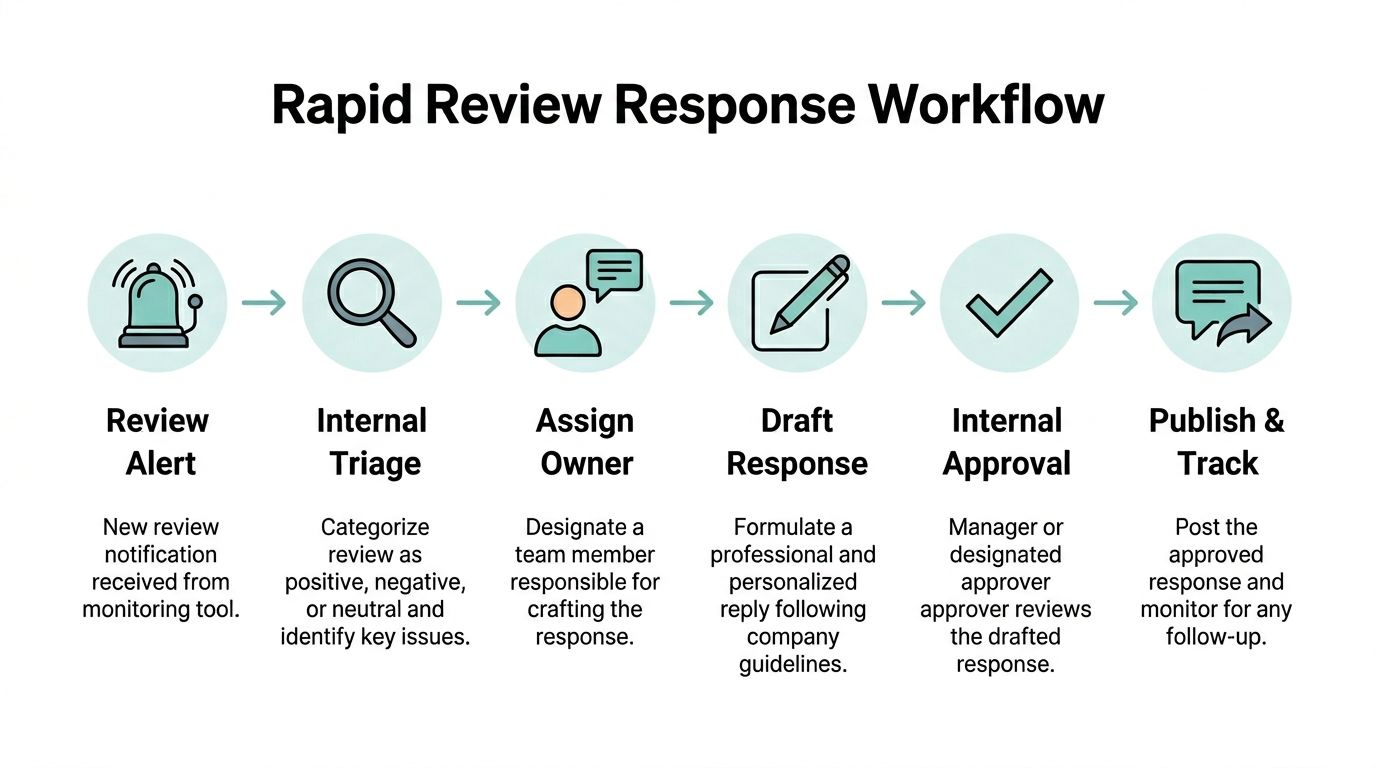
According to Gleantap’s review monitoring guidance, 50% of consumers check online feedback before visiting a business, and businesses using personalized, rapid responses within 2-4 hours for negative reviews saw a 30% increase in positive engagement and improved sentiment scores. For contractors, that matters because a late reply often means the prospect already called someone else.
Build your triage rules
Not every review deserves the same path. A one-star complaint about no-show service is not the same as a four-star compliment with a note about cleanup.
Use a triage model like this:
| Review type | First action | Owner |
|---|---|---|
| 5-star positive | Thank customer and log team recognition | Office manager |
| 3 to 4-star mixed | Identify issue and draft a clarifying response | Customer service lead |
| 1 to 2-star negative | Immediate review and escalation | Owner or senior manager |
The mistake I see most often is treating everything like a customer service task. Serious public complaints are leadership issues because they affect sales, hiring, referrals, and trust.
Set response deadlines people can follow
You need service-level expectations inside the company.
- Critical complaints: Trigger immediate notification to senior staff. The goal is action inside the same business block, not “when someone has time.”
- Mixed reviews: Respond promptly, but use the extra time to address the concern clearly.
- Positive reviews: Answer them consistently so your profile does not look abandoned.
If your shop already uses dispatch software, CRM tasks, Slack, Teams, or even simple SMS alerts, tie review notifications into the systems your people already watch. The best workflow is the one your staff will use every day.
Use sentiment and keyword tagging
A strong monitoring process does more than count stars. It tags themes.
Create categories such as:
- Slow response time
- Pricing confusion
- Scheduling problems
- Workmanship concerns
- Billing dispute
- Great technician experience
After a few weeks, patterns show up. If you keep seeing “late arrival” or “nobody called me back,” that is not a review issue. That is an operations issue showing up in public.
Tip: Reviews are market research written in plain English. Your buyers are telling you where trust breaks.
Approval should be fast, not theatrical
Some contractors make review response approval so cumbersome that nobody answers on time. Keep it simple.
One person drafts. One decision-maker approves. Then it gets published.
Do not run every review through three managers, legal panic, and a week of internal debate. A measured, professional response beats a perfect response that shows up after the lead is gone.
Handling Negative Feedback to Win Over Prospects
The customer who left the complaint matters. The bigger audience is everyone else reading it.
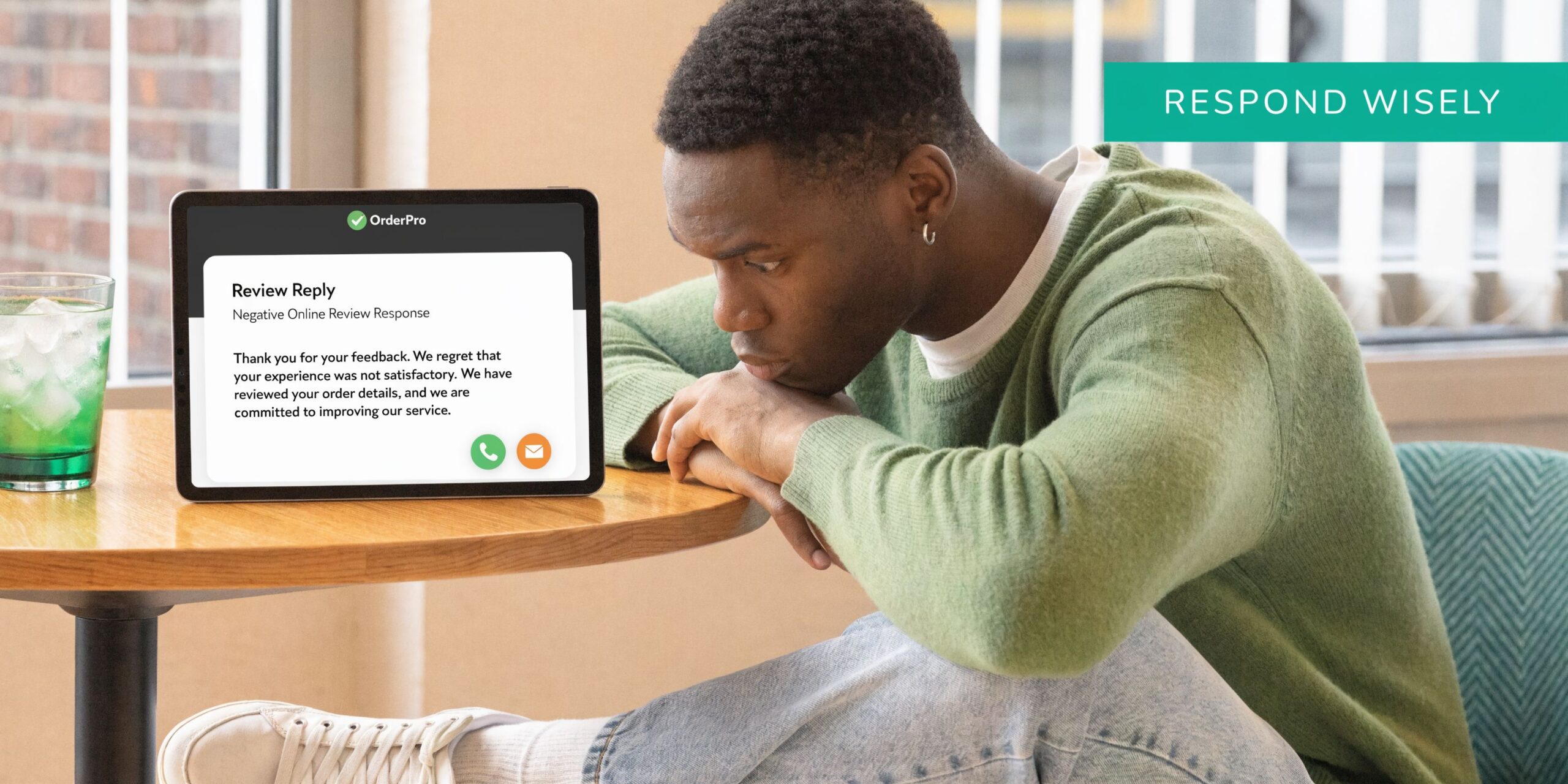
That silent audience is judging whether you are stable, professional, and trustworthy. They are also skeptical. According to Shapo review statistics, 95% of consumers read reviews, 62% are concerned about fake ones, and 96% of shoppers specifically read negative reviews to judge how a business handles problems. That means your reply is not damage control. It is a public sales asset.
What strong responses do
A strong response does four things in public:
- Acknowledges the frustration
- Shows a real human read the complaint
- Moves the resolution offline
- Signals accountability to future buyers
That is enough. You do not need to “win” the argument on Google.
Do this, not that
| Bad response | Better response |
|---|---|
| Defensive and emotional | Calm and specific |
| Generic copy-paste apology | Personalized acknowledgement |
| Public argument over facts | Invitation to resolve directly |
| Silence | Timely visible response |
Here is the posture I recommend.
Bad: “This review is inaccurate. We did everything right and the customer is leaving out important facts.”
Better: “We’re sorry to hear this job did not feel handled the way you expected. Our team takes scheduling and communication seriously. Please contact our office and ask for [name] so we can review the details and work toward a resolution.”
The second version protects you without sounding robotic or combative.
Use this response framework
When you monitor online reviews, your team should not write from scratch every time. Use a structure:
- Opening acknowledgment: Recognize the issue without admitting facts you have not verified.
- Specific reference: Mention the concern, such as scheduling, communication, or workmanship.
- Offline handoff: Provide a direct path to a person.
- Closing commitment: State that you want to resolve it.
Here is a flexible template:
“Thank you for your feedback. We’re sorry to hear you were frustrated with the experience, especially around [issue]. This is not the level of communication and service we aim to provide. Please contact our office and ask for [name] so we can review what happened and work toward a resolution.”
That works because it sounds human. It also gives future prospects something they want to see: restraint and responsibility.
Authenticity beats perfection
Consumers are increasingly alert to fake or AI-generated reviews. They are also alert to fake-sounding responses. If your replies read like legal boilerplate, you lose trust.
Write like a real business owner or manager. Short sentences. Specific language. No jargon. No copy-paste wall of text.
If you want examples from another service category where trust and reputation carry huge weight, this piece on online reputation management for dentists makes the same point in a different market. The buyer psychology is not that different.
For additional practical examples, this guide on how to respond to negative Google review is worth saving for your office team.
Rule: Never argue in public unless you enjoy helping your competitors close your leads.
Go on Offense Generate More Positive Reviews
Most contractors treat reviews like weather. They hope for good ones and complain about the bad ones.
That mindset keeps you stuck.
The better strategy is to generate a steady flow of authentic feedback from the much larger group of customers who were satisfied enough to use you, pay you, and move on without writing anything. Review data has a “highly polarized” distribution because customers with moderate experiences often decide leaving feedback is “not worth the time and effort,” according to ReviewTrackers on online review bias. That silent majority drags down the accuracy of your rating.

Stop waiting for happy customers to volunteer
Satisfied customers are busy. They are not thinking about your star rating after the job is done. If you want more positive reviews, ask every time a job closes cleanly.
That means building review requests into your process, not leaving it to chance.
A practical system looks like this:
- At job completion: Technician mentions that feedback helps the company and points the customer to the review link or QR code.
- Same day follow-up: Office sends a short SMS or email while the experience is still fresh.
- Second touch if needed: If there is no response, send one polite follow-up. Then stop.
Make it easy for field staff
Your technicians should not deliver a speech. Give them one line they can use naturally:
“Glad we could get that handled for you. You’ll get a quick message from the office. If you can leave feedback, it helps a lot.”
That is enough. No pressure. No awkward pitch.
A good explainer on the mechanics is this resource on how to get Google reviews from customers.
Timing matters more than clever wording
Ask when the customer feels relief. For contractors, that is usually right after the system is fixed, the leak is stopped, the roof issue is addressed, or the inspection is completed clearly.
Wait too long and the emotional payoff fades. Ask too early and the customer may not trust the result yet.
Here is a useful walkthrough on review collection in practice:
Keep the pipeline broad and fair
Do not cherry-pick only your happiest customers. That creates a distorted profile and can backfire. Ask broadly across completed jobs. The point is to surface real customer experience, especially from the large middle group that usually stays quiet.
Key move: The best defense against a damaging review is a larger body of recent, believable, positive feedback from real customers.
Measuring What Matters and Spotting Hidden Problems
If you cannot measure the system, you will drift back into reactive mode.
The core metrics are simple. Track your average star rating over time, review volume month to month, response rate, and response speed. Those numbers tell you whether your system is improving visibility, trust, and consistency.
But there is a second layer most contractors miss. Sometimes the problem is not just the reviews you can see. It is the ones that disappear.
According to SalesFuel’s analysis of review monitoring, Google’s AI filters may remove 5-star reviews more aggressively for “home services” because of perceived industry risk, and businesses may get no warning when that happens. If you only track visible review count, you can miss a serious reputation problem.
What to watch for
Create a simple tracking sheet or dashboard snapshot and review it regularly.
Look for:
- Visible review count drops: Especially when no obvious spam cleanup explains it.
- Missing recent positive reviews: A customer says they posted one, but it never appears or disappears later.
- Platform imbalance: Google trends down while other platforms stay steady.
- Suspicious timing: Reviews vanish after a surge of new customer activity.
What to do if reviews disappear
Do not panic and do not assume every missing review was maliciously removed. But do investigate.
Start with a basic process:
- Log the missing review with date, customer name if available, and platform.
- Ask the customer for a screenshot if they are willing.
- Compare before-and-after counts so you can identify patterns, not one-off anecdotes.
- Escalate through available support or appeal channels when appropriate.
- Keep collecting fresh reviews so one removal event does not stall momentum.
Here, serious contractors separate themselves from everyone else. They do not just monitor online reviews. They monitor the health of the review system itself.
If your company is tired of losing leads to bad Yelp pages, weak branded search results, or review problems that never seem to go away, Impruview is built for exactly that situation. They work with contractors who need more than basic reply management. The focus is improving what people see when they search your brand, promoting positive assets, and pushing damaging review content farther away from page-one visibility.