For any contractor, your reputation isn't just a point of pride—it's the bedrock of your business. To build real, lasting trust with customers, you have to do more than just deliver on your promises. It’s about being proactive, from how you handle a single bad review to how you structure your entire service experience.
This isn't just about damage control. It's about creating a system of reliability that turns a one-time job into a lifelong customer who recommends you to their friends and family.
Why Customer Trust Is Your Most Valuable Asset

Let's cut to the chase. In the world of high-ticket services like roofing, HVAC, or remodeling, trust isn't a "nice-to-have." It's the currency that converts a nervous homeowner into a signed contract. Think about it: a single scathing review on Google or Yelp can make your phone stop ringing, costing you thousands in lost jobs before you even get a chance to quote.
This is where the "trust premium" becomes very real. When customers have complete confidence in you, you can charge what you're worth without getting nickel-and-dimed on every line item.
Here's a powerful number to consider: a recent study found that customers are willing to spend 51% more with businesses they trust. For contractors, that often means you can command 15-20% higher prices without pushback.
That isn't just an abstract statistic. For a plumber or remodeler with an average job size over $500, that's pure profit added directly to your bottom line, all because you’ve earned the customer’s confidence.
The Financial Impact of Customer Trust vs Distrust
The difference between a high-trust and low-trust reputation shows up clearly on your balance sheet. One business thrives on referrals and premium pricing, while the other is stuck in a cycle of price-shopping and chasing cold leads.
The table below breaks down the tangible dollars-and-cents difference.
| Business Metric | High-Trust Contractor | Low-Trust Contractor |
|---|---|---|
| Pricing Power | Commands premium prices (15-20% higher) | Forced to compete on price, lower margins |
| Lead Conversion Rate | High conversion, as trust is pre-established | Low conversion, loses to better-reviewed competitors |
| Sales Cycle | Shorter; customers decide faster with confidence | Longer; requires more convincing and follow-up |
| Customer Lifetime Value | High; repeat business and strong referrals | Low; one-and-done jobs with no referrals |
| Marketing Costs | Lower; strong word-of-mouth generates free leads | Higher; must constantly pay for new, cold leads |
| Online Visibility | Ranks higher on Google due to positive reviews | Gets buried in search results by negative feedback |
As you can see, investing in trust isn't an expense—it's one of the highest-ROI activities you can focus on.
The Real Cost of a Trust Deficit
When a homeowner searches for your services, they’re not just looking for a qualified pro. They're actively scanning for red flags—reasons not to hire you. Inconsistent contact info, a handful of angry reviews, or a complete lack of a digital footprint all create friction and plant seeds of doubt.
This trust gap shows up in ways that directly hurt your business:
- Fewer qualified leads. Prospects will happily pay a bit more for a competitor with a 4.9-star rating because it feels like a safer bet.
- Constant price haggling. Without a stellar reputation to back you up, you’re just another name on a list, forcing you to fight over price.
- Zero referrals. An uncertain client isn't going to stick their neck out and recommend you to their network. They’re just glad the project is over.
Learning how to build trust with customers means you stop just being a service provider and start becoming a trusted partner. The benefits of reputation management are about more than just looking good online; they directly fuel your ability to grow a profitable, sustainable business for the long haul.
See Your Business Through Your Customer's Eyes
Before you can fix a trust problem, you have to see your business the way a potential customer does. That means doing a quick, honest audit of your online reputation.
First, open an incognito or private browser window. This is a crucial step because it clears your personal search history, showing you what a brand-new prospect sees, not results influenced by your own browsing.
Now, it's time to go searching. Think like a homeowner who needs your services and try a few different searches:
- "[Your Company Name] reviews": This is the go-to search for almost everyone. They want the unfiltered truth from past customers, and they want it fast.
- "[Your Service] in [Your City]": Think "roofing contractor in Austin" or "plumber near me." This shows you where you stack up against the competition on the search results page.
- "[Your Name] reviews": If you're the face of the business, people are absolutely searching for you by name. What they find can make or break a deal before they even call.
That first page of Google is your new storefront. It’s the first handshake. It can either give a customer a good gut feeling or send them running to your competitor. Don't just skim the star ratings; you need to dig into the actual comments.
Find the Real Source of the Problem
As you read through the feedback, you have to switch your mindset. It’s easy to get defensive, but you need to act more like a detective. Your only mission is to find the patterns that are causing people to lose faith in your business.
Check everywhere—Google, Yelp, Angi, and the Better Business Bureau. You're looking for the common thread.
Your online reviews are a direct report card on your real-world operations. A string of similar complaints isn't just noise; it's data telling you exactly where the breakdown is happening.
Are you noticing the same issues popping up over and over again? Start grouping them. This is how you find the root cause.
- Communication Gaps: Are people saying, "They never called back," or "The crew was hours late and I never got a heads-up"? That's a communication issue.
- Pricing Surprises: Do you see comments like, "The final invoice was $500 more than the quote," or "I was charged for things that weren't even done"? That points to a problem in your sales or billing process.
- Poor Workmanship: Complaints like "The leak came back a week later," or "They left nails all over my yard" are clear indicators of quality control slipping.
- Unprofessional Behavior: "The guy who came out was rude and dismissive," or "Their truck left a huge oil stain on my driveway." These are professionalism problems that kill referrals.
Once you’ve identified these recurring themes, you're no longer just putting out one fire at a time. You're developing a real strategy to fix the underlying issue. This is the only way to build a reputation that doesn’t just look good but actually earns you more business.
Your Immediate Damage Control Playbook
When a bad review pops up, your first 48 hours are absolutely crucial. Think of it as reputation triage. A quick, professional response shows everyone—especially potential customers—that you're on the ball and you take ownership. Ignoring it, or worse, waiting a week to reply, sends a message that you just don't care. That silence can often be more damaging than the review itself.
The biggest mistake I see contractors make is trying to win the argument online. Your public response isn't for the angry customer; it's for the hundreds of other people who will read it later. The goal is simple: acknowledge their frustration and immediately get the conversation offline. A public back-and-forth never ends well.
Crafting Your Public Response
Your public reply needs to be short, professional, and focused on a solution. This is not the time to hash out the details or get defensive. The moment you start making excuses, you validate the complaint in the eyes of every other reader.
Here’s a simple, proven framework for that public-facing reply:
- Thank them and apologize: Start by acknowledging their feedback. A simple, "We're sorry your experience wasn't up to par," shows empathy and disarms the situation immediately.
- State your commitment: Briefly mention you take this kind of feedback seriously. It shows you have standards.
- Move it offline: This is the most important part. Provide a direct line—a name, a phone number, or an email—for them to contact you personally. This demonstrates a genuine desire to resolve the issue.
I've put together a fill-in-the-blank template that covers all these bases without sounding robotic. It helps you stay professional when you're likely feeling frustrated.
Negative Review Response Template
| Component | Example Language / Action |
|---|---|
| Acknowledge & Apologize | "Hi [Customer Name], thank you for sharing your feedback. We're truly sorry to hear that your experience didn't meet your expectations." |
| Show Ownership | "We take this very seriously and are looking into what happened on our end." |
| Provide an Offline Path | "I'd appreciate the chance to discuss this with you directly and make it right. Please call me, [Your Name], at [Your Phone Number] at your convenience." |
| Sign Off Professionally | "– [Your Name], Owner" |
This approach confirms their feelings are valid and gives you a clear path to move the conflict out of the public eye. When things go sideways, a solid strategy for mastering review and response is non-negotiable for protecting your reputation.
Taking the Conversation Private
Once you've connected with the customer by phone or email, your first job is to just listen. Don't interrupt. Don't plan your rebuttal. Just let them get everything off their chest. More often than not, angry customers just want to feel heard.
After you fully understand their side of the story, you can start talking about a solution. Maybe that's a partial refund, sending a crew back to fix the mistake, or some other gesture to make things right. This private follow-up can occasionally even turn a detractor into an advocate. And even if they never update their review, your professional response remains there for all future customers to see.
For a deeper look at specific phrasing and tactics, our guide on how to respond to a negative Google review is a great resource. It all ties back to a fundamental process of diagnosing what went wrong so you can fix it.
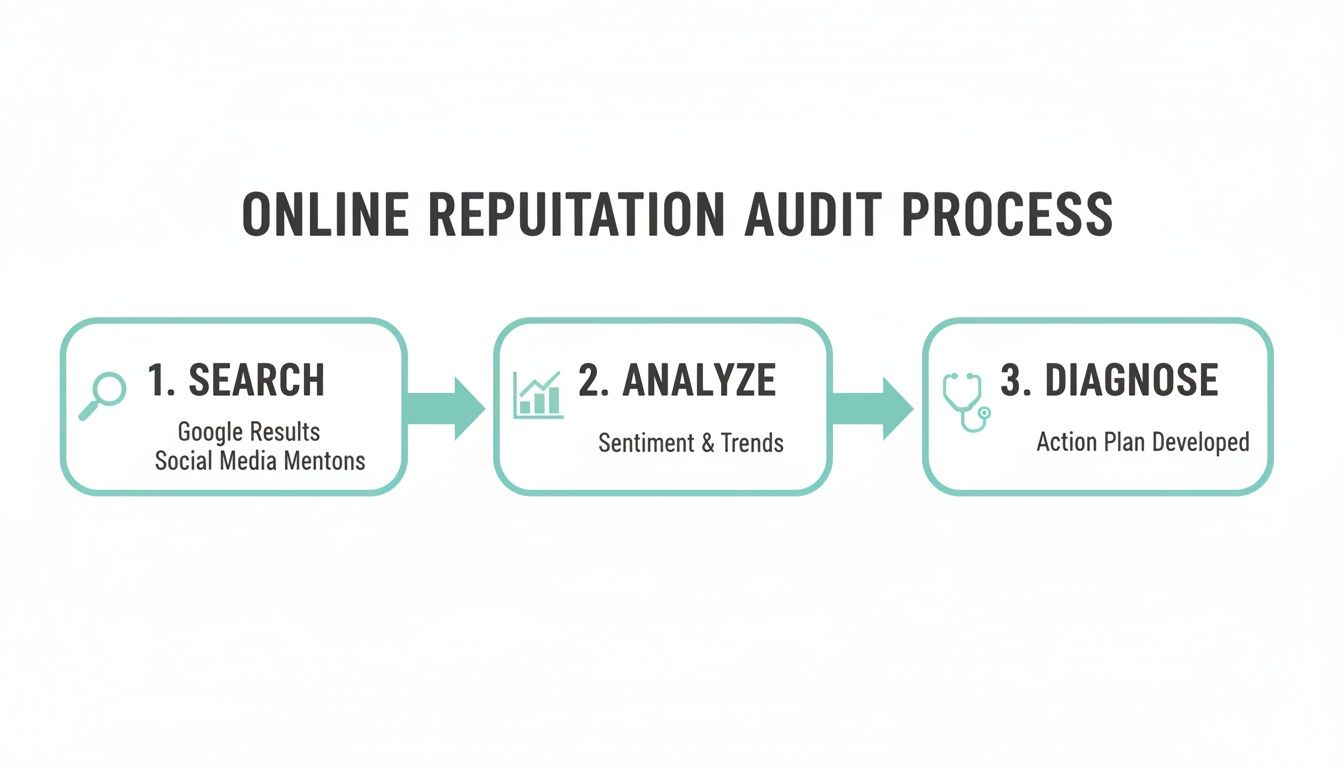
This workflow—Search, Analyze, Diagnose—is the bedrock of good reputation management. First, you find the negative feedback. Then, you analyze the complaint to understand the real problem. Finally, you diagnose the root cause, which allows you to put a real, lasting fix in place.
Fixing Your Operations to Build Lasting Trust
Responding to angry Yelp reviews is just playing defense. It's damage control. If you want to build the kind of trust that makes customers recommend you for years, you have to go on offense, and that starts long before your truck ever pulls up to a job site.
Your online reputation is a mirror reflecting your real-world operations. If you've got a steady stream of complaints, the problem isn't just a few grumpy customers; it's a crack in your process. Fixing the source of those complaints is the only way to earn real, lasting loyalty.
Get Your Communication Dialed In
Nine times out of ten, a bad review comes down to bad communication. It’s that simple. Missed appointments, surprise charges, and blown timelines don’t just frustrate homeowners—they make you look disorganized and untrustworthy.
The fix? Set crystal-clear expectations from the very first conversation. Using a proven client onboarding process template is a game-changer here. It gets everyone on the same page before a single hammer is swung, which is the bedrock of building trust with new clients.
- Automate reminders. Simple software can send out appointment confirmations and "we're on our way" texts. This one small step removes a massive amount of anxiety for the customer.
- Document everything. Get change orders approved in writing. A quick text or email is all it takes to create a paper trail and avoid those awful "he said, she said" arguments over the final bill.
- Live by a "no surprises" rule. The moment your team finds something unexpected that will change the scope, timeline, or budget, the very next action is to call the customer. No exceptions.
This isn't about over-communicating; it's about being professional. When you're proactive, the customer feels confident. They know you're in control and that you have their back.
Put Your Money Where Your Mouth Is with Ironclad Guarantees
A strong guarantee isn't just a safety net for the customer; it's a powerful statement about the quality of your work. You're telling them you're so confident in your team that you're willing to put your own money on the line. For a homeowner who’s nervous about getting ripped off, that instantly makes hiring you a much easier decision.
Let's be real: true customer loyalty is getting harder to earn. One recent report showed that deep brand loyalty fell to just 29% in 2025. That should be a wake-up call. But here's the flip side: that same data revealed that 88% of customers who do trust a brand will hire them again. The payoff for getting your service right is huge.
A guarantee isn't just a marketing tactic; it's an operational standard. It forces your entire team to up their game because they know that cutting corners will cost the company directly.
Think about offering specific, tangible guarantees that tackle common fears head-on:
- Workmanship Warranty: A straightforward, written warranty on all labor for a set period, like one or two years.
- On-Time Guarantee: Offer a small, automatic discount if your crew is late for a scheduled start time without calling ahead.
- Cleanliness Promise: Make a firm commitment to leave the job site cleaner than you found it, every single day.
These operational fixes are the real secret to building a five-star reputation from the inside out. They prevent problems before they can even start, which is how you turn everyday customers into your biggest fans.
Building a Wall of Positive Proof
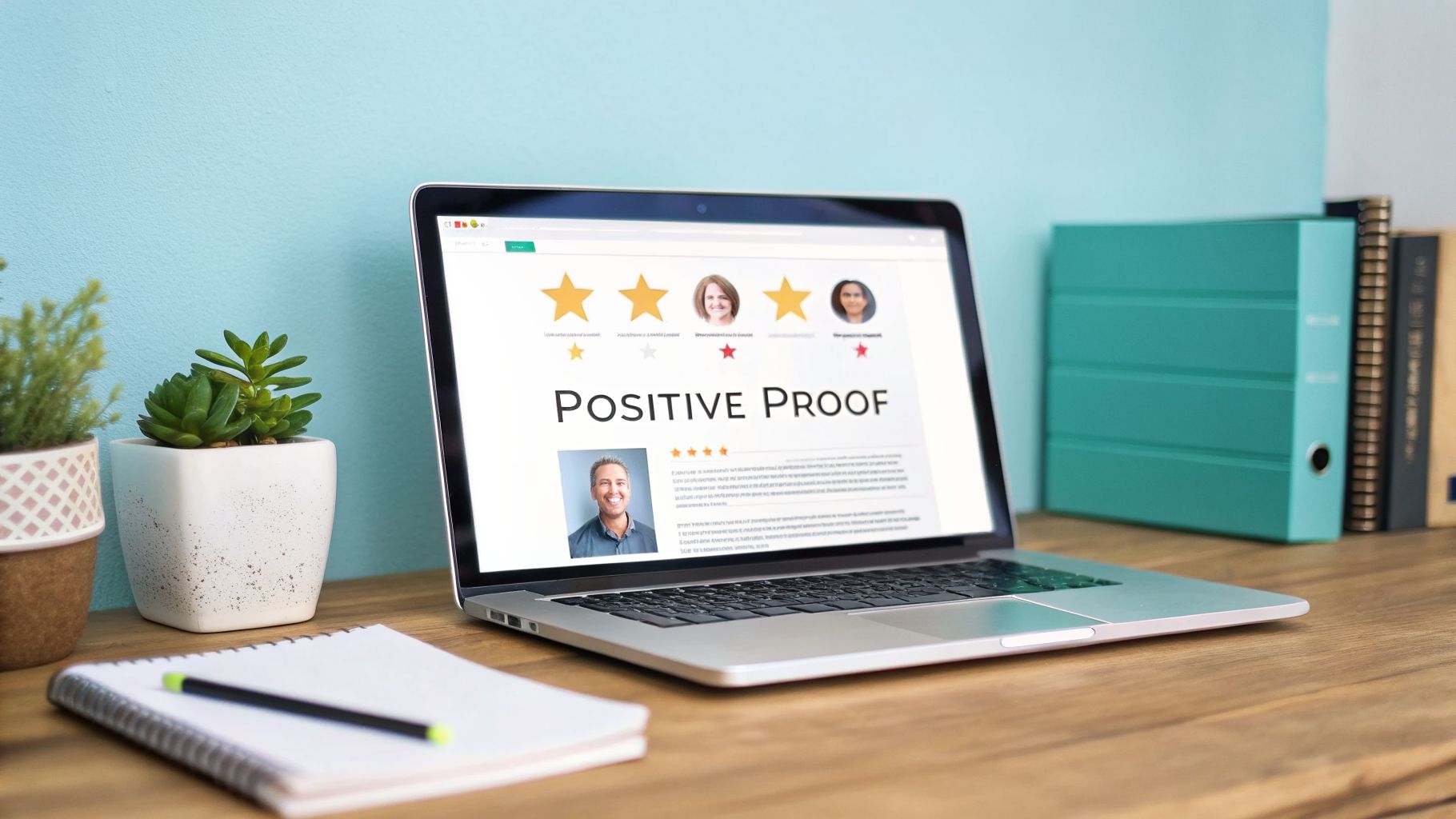
Once your internal operations are running smoothly, it's time to shift from defense to offense. Rebuilding trust isn’t just about damage control; it's about actively showcasing the quality work you do every single day. The idea is to create such a powerful wave of positive social proof that any random bad comment just gets washed away.
Think of it as a "content flood." You're not just crossing your fingers for a good review now and then. You’re deliberately and systematically building an online presence so dominant that it’s impossible for a potential customer to miss your track record of success. This means turning your happy clients into vocal advocates and your finished projects into compelling stories.
Turn Happy Customers into Your Best Marketers
Most of your satisfied customers are more than willing to leave you a great review. The problem? They're busy. They forget. Your job is to make it ridiculously easy and part of the process. That golden moment right after the project is done, when the homeowner is thrilled with the result—that's your window.
Don't just send a bland, automated "Please review us" email. Get personal. A quick text or a short email that says, "John, it was a real pleasure installing your new AC unit. If you have a minute, we'd be grateful if you could share your experience on Google," feels human and genuine.
By making the review process a seamless part of your project wrap-up, you turn it from a chore into a natural final step. This simple habit is the engine that drives your five-star reputation forward.
Consistency is everything. Make asking for reviews a standard operating procedure for every single job. This creates a steady stream of fresh, positive feedback that Google’s algorithm rewards, helping you climb in the search rankings and push any older, negative stuff further down the page.
Showcase Your Successes with Branded Content
Reviews are critical, but they're only one piece of the puzzle. The real power move is to start creating your own positive content. These are the assets you control completely—things like project case studies, blog posts, and video testimonials.
Start thinking of every successful job as a story you can tell.
- Before-and-After Galleries: Nothing sells a transformation faster than visuals. For any contractor in the visual trades—remodeling, roofing, landscaping—a sharp, high-quality photo gallery of a finished kitchen or a brand-new roof is undeniable proof of your craftsmanship.
- Detailed Case Studies: Go deeper than just pictures. Write up a short post on your blog that walks through a particularly challenging project. Explain the problem the homeowner was dealing with, the solution you came up with, and show the final outcome. This frames you as an expert and a problem-solver, not just an installer.
- Video Testimonials: A simple 60-second video of a happy client talking about their experience is marketing gold. It’s authentic, it’s relatable, and it’s much harder to fake than a written review. For some great tips on this, check out our guide on how to ask customers for testimonials.
This proactive approach is how you build that "wall of proof" brick by brick, creating a fortress of credibility and expertise around your brand.
Credibility Is Your Most Valuable Asset
Ultimately, all these efforts feed into a single, crucial goal: building unshakable brand credibility. This isn't just some fuzzy marketing term; it's a direct line to your bottom line.
One analysis projects that by 2026, a staggering 97% of consumers will prioritize brands they see as genuine, with 85% actively choosing to buy from them. That makes your credibility one of your most valuable business assets. The same report found that trust signals like reviews and certifications can directly boost conversions by over 35%—proving a strong reputation is just as important as your pricing or even the quality of your work. You can dig into the data in the full analysis on why brand credibility is a key asset.
When a prospect looks you up online and finds a portfolio packed with success stories, glowing reviews, and video praise, you make their decision easy. You've already answered their questions and calmed their fears before they even think about picking up the phone.
Common Questions (and Real-World Answers) About Rebuilding Trust
Even with a solid game plan, you're bound to run into some tricky situations. Let's tackle some of the tough questions we hear from contractors who are in the trenches, working to turn their reputation around.
How Long Does This Actually Take?
It’s the first thing everyone wants to know, and the truth is, it's a two-part answer. You can make an immediate dent in how people perceive you just by getting on top of your reviews. Responding professionally to a negative review within 24-48 hours sends a powerful, instant signal that you're paying attention and you care.
But actually rebuilding that deep, foundational trust—the kind that moves your star rating and makes your phone ring—is more of a marathon. If you stick with the plan, consistently earning new positive reviews and sharing your project successes, you’ll typically see a real, tangible shift in your search results and the quality of your leads within 30 to 60 days.
Should I Just Offer a Discount to Get a Bad Review Taken Down?
Be really careful with this one. It feels like a quick fix, but offering a refund or a discount specifically in exchange for removing a negative review can blow up in your face. It can look like you’re trying to buy their silence, not genuinely solve the problem. Plus, it can get you in hot water with platforms like Yelp and Google, as it often violates their terms of service.
The smarter play is to focus on fixing the customer's issue, no strings attached. Go above and beyond to make it right. If you do a great job and they're genuinely happy with how you handled it, they might just go back and update their review on their own.
Your goal should be to fix the problem because it’s the right way to run a business. If they change the review, that’s a fantastic bonus, but it can’t be the price of your service recovery.
This approach keeps your integrity intact and works far better for building a trustworthy reputation in the long run.
What If a Bad Review Is Fake or Just Plain Unfair?
It’s one of the most frustrating things to deal with—a one-star review from someone you’ve never worked for or one that completely misrepresents what happened. The first thing you should always do is go through the platform's official process to flag the review for removal. Give them any proof you have that it violates their policies (e.g., you have no record of the customer).
While you're waiting for the platform to review your case, you absolutely need to post a public response.
- For a review you suspect is fake: Keep it calm and professional. Something like, "We take all customer feedback seriously, but our records show no client with this name or project details. If you were a customer, we urge you to contact our office directly so we can find your project and address your concerns."
- For a review that's just unfair: The customer is real, but they're twisting the story. Stick to your damage control script. Acknowledge their frustration, state the facts of the situation politely (without getting into a public argument), and offer to resolve it offline.
Your public response isn't really for the angry customer; it's for the hundreds of potential customers who will read it later. Show them you're the professional in the room.
How Many Good Reviews Do I Need to Drown Out a Bad One?
There isn’t a magic number here. The real goal is to build such an overwhelming body of evidence that a single bad review looks like a fluke. When you consider that 87% of consumers say they'd happily pay more to work with a company they trust, you realize that both the quantity and quality of your reviews matter.
Think in terms of ratios, not raw numbers. If you have one ugly one-star review, surrounding it with 10 to 15 glowing, five-star reviews makes it almost irrelevant. The key is having a system that reliably brings in fresh, positive feedback month after month, so your reputation is always growing stronger.
Are negative reviews on Google and Yelp costing you thousands in lost jobs? Impruview helps contractors dominate their search results by flooding the internet with positive content, pushing down unfair reviews for good. Our strategy is designed to deliver visible results in 30–60 days. Stop losing leads and start building the five-star reputation you deserve by visiting us at https://www.impruview.com.