A lot of contractors think they have a lead problem when they have a reputation problem.
The phone still rings. Estimates still go out. Your trucks are on the road. But branded search tells a different story. A homeowner types your company name into Google, sees a rough Yelp result, a few stale reviews, maybe one angry one-star post near the top, and moves on without ever calling.
That loss usually stays invisible. The office blames seasonality. Sales blames pricing. Operations blacingly says leads are weaker than they used to be. In reality, people are screening you before they ever hit your website.
If you want to get more review volume that helps revenue, you need more than a polite ask at the end of a job. You need a system built for high-ticket trades, and you need a defensive plan for the bad results already sitting on page one.
The Silent Killer of Your Contracting Business
A familiar situation plays out every week in home services.
You quote a replacement, a repipe, a panel upgrade, a roofing project, or a remodel. The homeowner sounds interested. Your price is within range. Then the job disappears. No callback. No signed proposal. No real objection.
Later, someone in the office searches your company name and finds the issue. A negative Google review. A Yelp page ranking high on branded search. Maybe an old complaint that no longer reflects the business, but still shows up first when a prospect does basic due diligence.
That is not a branding nuisance. It is a sales leak.
93% of consumers read online reviews to influence their purchase decisions, and for local service businesses with average tickets over $500, a negative online presence can cost thousands in lost opportunities monthly, according to Chatmeter’s review statistics roundup.
For contractors, that risk is bigger than it looks on paper. A bad restaurant review might cost a lunch order. A bad HVAC or plumbing review can kill a multi-thousand-dollar ticket. The homeowner is not just choosing a vendor. They are choosing who gets access to their home, their time, and a serious chunk of money.
Why contractors miss the damage
Most companies only track leads that come in. They do not track the leads that never happen because branded search failed the trust test.
That means the damage hides in plain sight:
- Your close rate slips: Estimates feel harder to win even when your process has not changed.
- Your branded traffic underperforms: People search your company, but fewer convert.
- Your sales team gets price shopped: A weak review profile makes every quote feel riskier.
- Your best work gets ignored: The market sees the review snapshot, not the job quality behind it.
A weak review profile does not just reduce clicks. It changes how every prospect interprets their price.
There is also a timing issue. Homeowners often look at reviews at the exact moment they are ready to buy. That is why a handful of negative reviews can hurt more than many contractors expect. The review check happens late in the decision process, right before the call, form fill, or signed estimate.
If you want to get more review traction that protects revenue, treat reputation like part of your sales pipeline. Because it is.
Building Your Review Generation Foundation
Most review campaigns fail before the first ask.
The business has no target platform, no process for technicians, no review link ready, and no one owns the outcome. Then management says customers “just don’t leave reviews.” That is usually not true. The request system is broken.

85% of consumers trust online reviews as much as personal recommendations, and Google is the first stop for 83% of them, according to Shapo’s review statistics summary. For contractors, that means your Google presence is not an add-on. It is core credibility.
Start with Google first
If you only have the bandwidth to build one platform well, make it Google.
Google is where branded search happens. It is where homeowners check your rating, scan recent comments, and decide whether you look active, trusted, and current. For most home service companies, Google reviews influence both conversions and local visibility.
That does not mean Yelp is irrelevant. It means Yelp is usually not the best first move when building a get more review system from scratch.
Google and Yelp are not the same game
Contractors make a mistake when they treat every review site the same.
Google rewards consistency. You want a steady stream of real reviews tied to completed jobs. Recency matters. Volume matters. Relevance in review text matters. A profile that looked fine a year ago can look stale today if no one has reviewed you lately.
Yelp is trickier. Some legitimate reviews may not stick if the reviewer has little activity on the platform. That is why forcing customers to Yelp first can create frustration. The customer leaves a review, the review gets filtered, and your team thinks the campaign failed.
Use Yelp as part of your overall footprint, but do not build your entire reputation engine around it.
Clean up the basics before you ask
Before you try to get more review volume, make sure your profiles are usable.
Check these items:
- Business info: Company name, phone, service area, and hours should match everywhere.
- Photos: Add real jobsite, team, truck, and office photos. Stock images weaken trust.
- Service descriptions: Make them specific to your trade and market.
- Direct review link: Create a simple path straight to your Google review form.
- Ownership: One person needs to own review operations, even if several people contribute.
A strong foundation also supports the rest of your visibility work. If your local presence is sloppy, your review gains will not hit as hard. Contractors working on broader search visibility should also understand how reviews fit into local SEO for contractors.
Set goals that match contractor reality
Do not obsess over a vanity star target and call it strategy.
A better approach is to define operational goals:
- Monthly review rhythm: Set a steady review target your team can hit consistently.
- Recency standard: Make sure new reviews continue to appear rather than arriving in bursts.
- Platform priority: Google first, then the other directories that show up for your brand.
- Response habit: Every review gets a response that sounds human, not copied from a template bank.
Contractors do better with a review cadence than with a one-time campaign. Search platforms reward momentum, and buyers trust activity.
One more practical point. Review generation should reflect your ticket size. If you sell maintenance plans, drain cleaning, inspections, replacements, and full installs, your ask strategy should differ by service. The highest-converting review requests usually come right after the customer has clearly felt the value of the work.
That timing becomes the engine for everything else.
The Onsite and Digital Review Request Playbook
The best time to ask for a review is not “sometime later.” It is when the customer has just seen the fix, felt the relief, and told your tech, “Looks great.”
That is the moment most contractors waste.
Instead of using that moment, they wait for marketing to send a generic email days later. By then the emotion is gone, the homeowner is back to work, and the task feels optional. If you want to get more review results consistently, the ask has to happen close to the win.
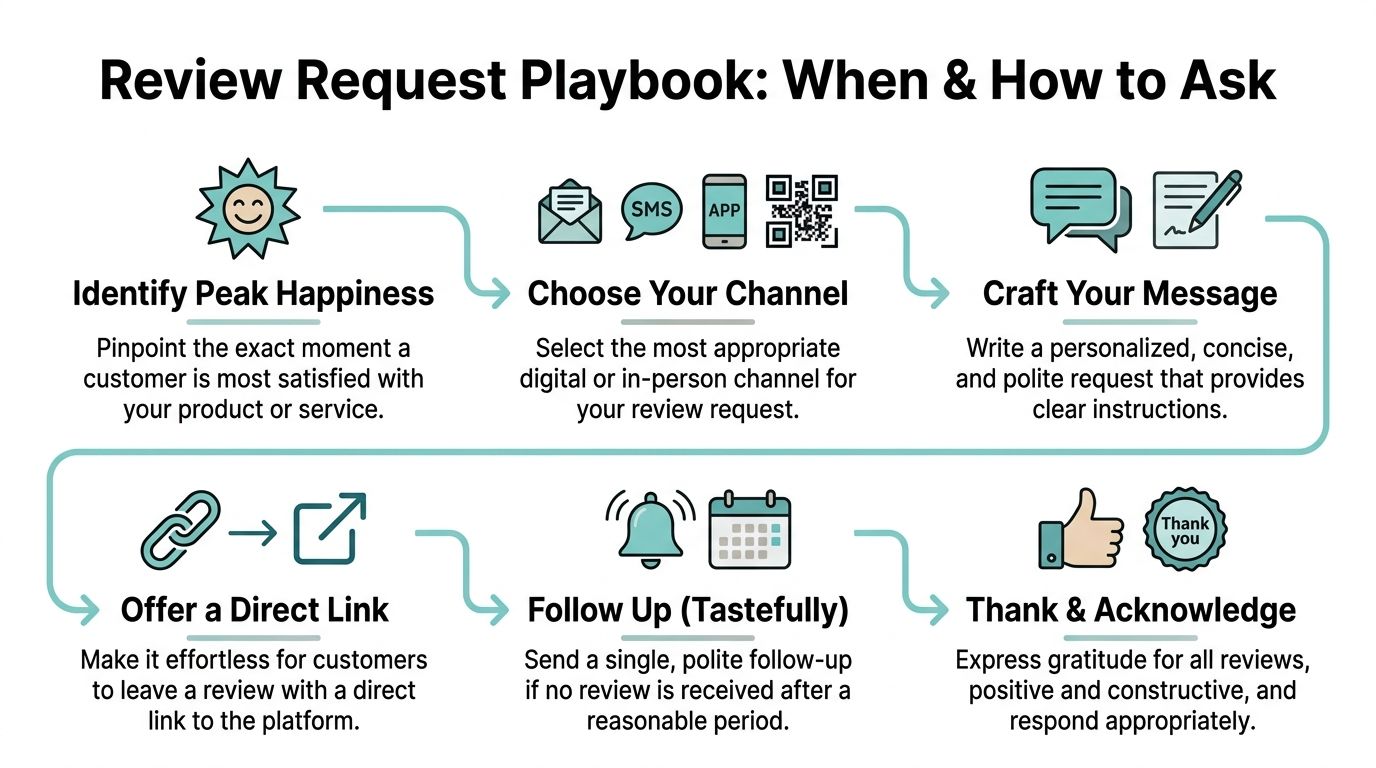
A dual-channel system that combines in-person requests with automated SMS and email follow-ups can help contractors achieve 40+ new Google reviews within 90 days, according to Review Overhaul’s guide to getting more Google reviews. That matches what strong field teams know. The face-to-face ask opens the door. Automation catches the rest.
Ask at the moment of peak satisfaction
The technician matters more than the software.
A homeowner is most likely to respond when the job has just been completed well and the tech has earned trust. This is especially true in home services, where the customer often spent the appointment stressed, inconvenienced, or worried about cost. Once the problem is solved, the emotional swing works in your favor.
That is the moment to use a short, direct script.
Keep it simple:
- Acknowledge the result: “Glad we got that fixed for you today.”
- Make the ask naturally: “If you have a minute, would you mind leaving us a Google review?”
- Reduce friction: “You can scan this QR code and it will open the page right away.”
No pressure. No incentive. No weird speech.
What works onsite
The onsite ask works best when the field process is standardized but still sounds human.
Good teams train techs on a few basics:
Only ask after the customer signals satisfaction
If the customer is still frustrated, confused, or debating the invoice, do not push for a review.Use a printed QR code on something real
Put it on the invoice folder, thank-you card, or leave-behind sheet. A review ask buried in conversation is easy to forget.Keep the request short
Long explanations lower compliance. The customer knows what a review is.Do not mention rewards or discounts
That creates policy risk and lowers trust.Let the tech own the ask
The customer is responding to the person who solved the problem, not to your CRM.
The strongest review request in contracting is usually a calm, two-sentence ask from the tech who just finished the job.
Why SMS usually beats email first
Email still has a place, but SMS often wins on speed and convenience. Homeowners can tap the link immediately, especially if the request lands while the memory of the service call is still fresh.
Use SMS as the first follow-up when possible. Keep it brief. One link. One ask.
Email works better as a backup channel because it gives you more room to personalize, reinforce the service details, and include a clear signature from the company.
Review Request Templates for Contractors
| Channel | Script / Template | Best Practice Tip |
|---|---|---|
| In-person | “Glad we could get this taken care of for you today. If you have a minute, would you be open to leaving us a Google review? You can scan this code and it will take you right there.” | Ask only after the customer confirms they are happy with the work. |
| SMS | “Hi [First Name], thanks for choosing [Company Name] today. If you can spare a minute, we’d appreciate your feedback on Google: [Direct Review Link]” | Send while the visit is still fresh, and use the direct review link only once in the message. |
| “Subject: Thanks for choosing [Company Name]nnHi [First Name],nnThank you for trusting us with your [service type]. Feedback from customers helps other homeowners feel confident choosing the right contractor. If you would like to share your experience, you can leave a Google review here: [Direct Review Link]nnWe appreciate your business.nn[Name]n[Company Name]” | Keep the email plain and personal. Avoid heavy graphics that distract from the ask. | |
| Follow-up SMS | “Hi [First Name], just a quick follow-up and thank you again for choosing [Company Name]. If you still want to leave feedback, here is the review link: [Direct Review Link]” | Send one polite reminder only. More than that starts to feel desperate. |
| Office call after larger project | “We wanted to make sure everything still looks good on your end. If you’re happy with the project, a review on Google would mean a lot to our team.” | Use this for replacement jobs, remodels, roofing, and other higher-ticket work where the relationship lasted longer. |
For more practical wording examples, this guide on how to ask customers for testimonials is useful for refining the tone without making the request sound robotic.
Scripts that sound normal
The best review scripts do not sound like scripts.
A bad one sounds like corporate copy. A good one sounds like something a service manager or technician would say in a driveway, kitchen, mechanical room, or at the front door.
Here are three versions that fit common contractor scenarios.
For service calls
Use this when the problem was fixed during the visit.
“Thanks again for having us out today. If you have a minute, would you mind leaving us a Google review? It helps other homeowners know what to expect.”
This works because it is low pressure and framed around helping others.
For install or replacement jobs
Use this when the customer has just walked the finished work with your team.
“We appreciate the opportunity to do this project for you. If you’re happy with the job, a Google review would be a big help to our team.”
This version feels more appropriate for higher-ticket work. It respects the size of the project and avoids sounding transactional.
For office follow-up
Use this after the job, especially when the salesperson or office manager has rapport.
“Just checking in to make sure everything is going smoothly. If you’re happy with the work, we’d appreciate a Google review when you have a minute. I can text the direct link over.”
This works because it starts with service, not the ask.
Common mistakes that kill review volume
A lot of contractors do the hard part well. They complete quality work. Then they ruin the ask.
The usual mistakes:
- Waiting too long: Delayed requests lose emotional momentum.
- Using a generic blast: “Dear customer” emails feel mass-produced.
- Sending customers to your homepage: Any extra click lowers completions.
- Asking everyone the same way: A drain cleaning call and a kitchen remodel are not the same customer experience.
- Overtalking the request: The more you explain, the less likely they act.
Make the review easier than ignoring it
Every extra step cuts response.
That means your team should remove friction wherever possible:
- Put QR codes on printed materials the customer receives.
- Use direct links that open the review prompt.
- Preload contact records so office staff can trigger requests fast.
- Keep the request mobile-first, because many customers will leave the review on their phone.
The companies that get more review consistency do not rely on charisma. They rely on frictionless execution.
Automating Your Reputation Engine for Consistent Growth
A review system held together by memory will break.
Techs forget. Office staff get slammed. Service managers assume somebody else sent the link. A month passes, and the only customers getting asked are the ones someone happened to remember.
That is why the best contractors build a reputation engine instead of a casual review habit.
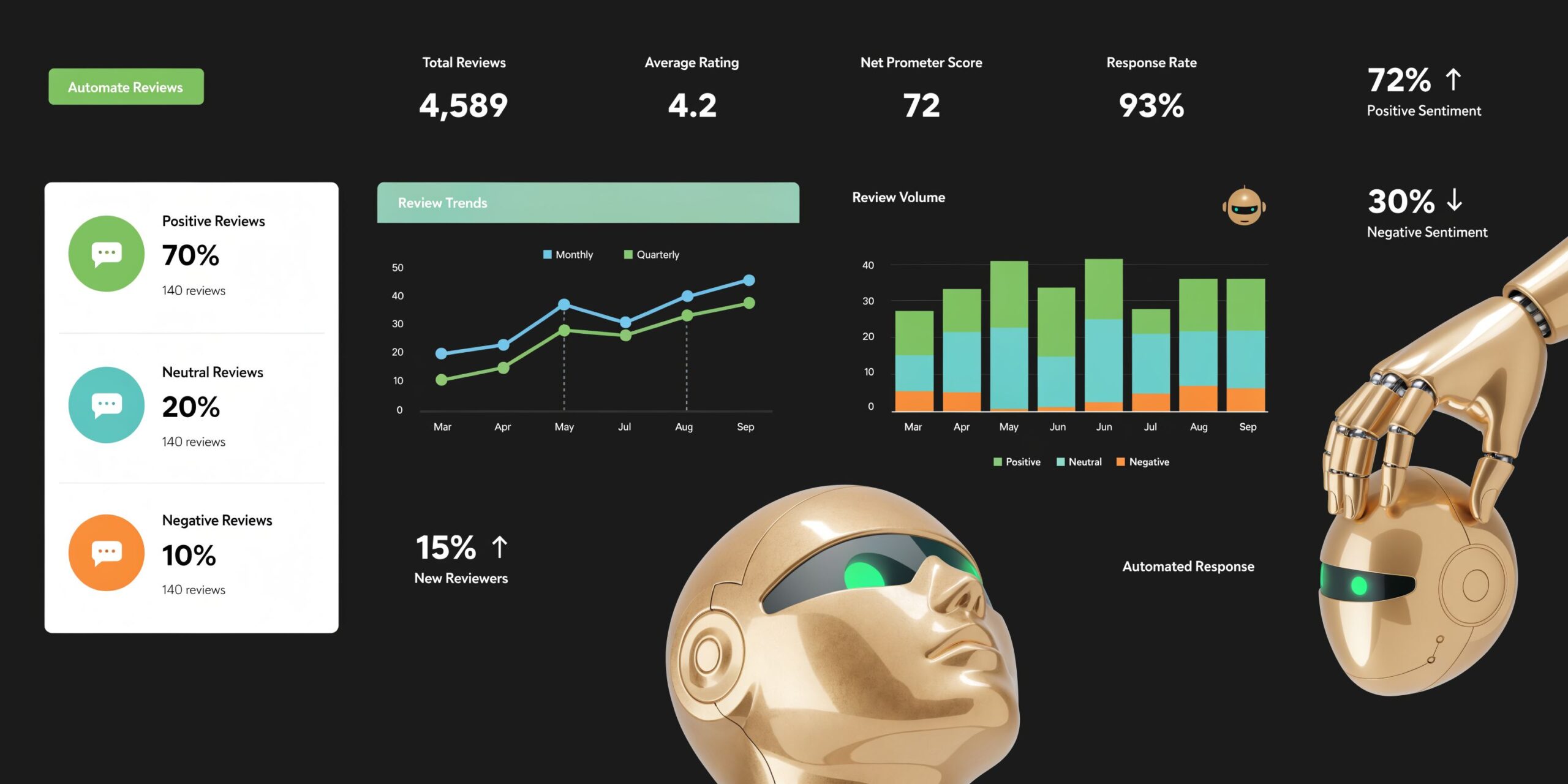
The workflow that scales
The simplest version is enough for most home service companies:
Job marked complete → trigger review request → send personalized SMS or email → track response → follow up once if needed
That workflow can live inside the tools you use. For many contractors, that means the CRM, scheduling platform, invoicing system, or a review platform tied to Google Business Profile operations.
The point is not fancy software. The point is consistency.
What to automate and what not to automate
Automation should handle timing and delivery. Humans should still control judgment.
Automate these parts:
- Completion trigger: When a job closes, the request queue starts automatically.
- Channel choice: SMS first for most service calls, email for backup.
- Personal fields: First name, company name, service type, technician name.
- Reminder cadence: One tasteful follow-up if the first request gets ignored.
Keep these parts manual:
- Whether the customer should be asked right now
- How negative feedback is handled
- Review responses
- Escalation for bad service experiences
That split matters. Full automation without judgment creates awkward review asks after disputed invoices, callbacks, or messy punch lists.
Automation should scale your process, not remove common sense.
Build a simple review pipeline
You do not need a giant dashboard to start. You need a working pipeline.
A practical setup looks like this:
- Step one: Field or office marks the job complete.
- Step two: The system waits briefly, then sends the first request.
- Step three: If no review comes in, one reminder goes out later.
- Step four: Someone checks responses and flags unhappy customers for service recovery.
This is also where personalization matters. A message that references the actual service feels legitimate. “Thanks for trusting us with your water heater replacement” performs better than a generic “Thanks for your business.”
A short explainer on automation strategy fits well here:
Keep the cadence clean
Contractors often overcomplicate follow-up cadence.
You usually need:
- A first request soon after the job is completed
- A second reminder if the customer does nothing
- No nagging beyond that unless there is a real relationship reason
If a customer wants to leave a review, they usually do not need six reminders. A clean process respects the customer and protects your brand tone.
The hidden benefit of automation
A strong automation setup does more than gather reviews. It exposes service patterns.
When review requests go out consistently, you can start spotting patterns by technician, service line, or location. Maybe one crew gets enthusiastic praise for cleanliness. Maybe another keeps getting mentions about late arrivals. That feedback is operational gold if you review it.
A mature reputation engine does two jobs at once. It creates social proof and it gives management a continuous read on customer experience.
That is how review generation turns from marketing task into business system.
When Asking Isnt Enough The Content Flood Strategy
Some contractors do everything right on review generation and still have a problem.
They ask on time. They automate follow-up. They collect fresh Google reviews. But when someone searches the company name, a damaging Yelp page or old negative result still sits high on page one and soaks up attention.
At that point, asking for more reviews is necessary, but not sufficient.

Removal is often the wrong fight
A lot of owners burn time trying to get bad reviews deleted.
Sometimes that works. Often it does not. Platforms tend to keep reviews live unless they clearly break policy. So the contractor spends weeks arguing with support while the negative result keeps ranking on branded search.
That is the wrong battlefield.
The smarter approach is to improve what the searcher sees overall. Instead of hoping one bad asset disappears, you build enough positive branded assets that the bad result gets pushed lower and clicked less.
The revenue math gets ugly fast
For high-ticket trades, the cost of inaction is not abstract.
According to Scrap.io’s discussion of negative review impact, four negative reviews can deter 70% of potential customers. The same source notes that a contractor with a $5,000 average ticket who loses 10 leads a month faces $50,000 in monthly revenue loss, and that content flooding can show measurable ROI in 30-60 days.
That is why reputation defense matters more for roofers, remodelers, HVAC companies, electrical contractors, and plumbing firms with larger tickets. One ugly branded search can wipe out a meaningful chunk of pipeline.
If negative review platforms dominate your branded search, review generation alone may not fix the conversion problem fast enough.
What a content flood strategy means
This is not fake review spam. It is not forum junk. It is not gaming platforms with nonsense.
A real content flood strategy means building and promoting positive branded assets that deserve to rank. The aim is to crowd page one with stronger, more representative results.
That usually includes:
- Optimized business profiles across relevant platforms
- Branded articles that tell your company story, services, and expertise
- Press-style assets that strengthen branded search coverage
- Positive review promotion so good customer feedback becomes more visible
- Search result polishing so your branded SERP looks intentional instead of neglected
The key is relevance. Every asset should support the brand name someone is searching and give Google a better set of options than the negative result currently enjoying visibility.
Who needs this most
Content defense is not for every contractor.
It is most useful when:
- Your branded search is visibly damaged
- A Yelp or review profile ranks too high
- Negative results show up before your own strongest assets
- You sell high-ticket work where trust friction crushes close rates
- You have already started getting more review volume, but conversions still lag
The mistake is thinking this is separate from review generation. It is not. Review generation is your offensive line. Content flooding is your pass protection when the existing search results are already working against you.
If your company only focuses on getting more review count while page one still showcases the worst version of your business, this leaves the underlying problem partially solved.
Tracking KPIs That Drive Revenue
The wrong metric makes contractors complacent.
A company sees a decent star rating and assumes the problem is fixed. Meanwhile, review flow is inconsistent, branded search still underperforms, and nobody is tracking whether review work is producing more calls, better lead quality, or stronger close rates.
If you want a review strategy that makes money, track metrics tied to buying behavior.
Stop staring at star rating alone
Star rating matters, but it is not enough.
A better measurement stack includes:
Review velocity
Are new reviews coming in consistently, or only after someone remembers to ask?Sentiment mix
Are recent reviews reinforcing trust, or are they introducing new objections?Response discipline
Are you replying to reviews quickly and professionally?Branded search conversion
When people search your company name, are they calling, booking, or bouncing?Review content quality
Do the reviews mention the services and terms you want associated with your brand?
That last point gets ignored far too often. Amid projected 2026 platform crackdowns on incentives, ethical scaling matters, and 2025 SEO studies indicate that keywords within review text can affect local pack rankings more than star ratings alone, according to this YouTube discussion on review strategy and policy shifts. For contractors, that means “great service” is nice, but “fast AC repair,” “panel upgrade,” or “roof leak repair” can be more useful if those phrases show up naturally in honest customer feedback.
What to watch every month
Do a monthly review meeting. Keep it tight.
Look at:
| KPI | What to check | Why it matters |
|---|---|---|
| Review velocity | New reviews by month and by location | Tells you whether the system is alive or stalled |
| Recent sentiment | Themes in positive and negative comments | Shows where ops and customer experience need work |
| Response time | How quickly your team replies | Signals professionalism and can soften negative impressions |
| Branded search actions | Calls, form fills, and website visits from brand-driven traffic | Connects reputation work to revenue |
| Review language | Service keywords customers naturally use | Helps you understand what the market now associates with your brand |
Use tracking links where it makes sense
If you send review requests through SMS or email, use tagged links in your process where appropriate so you can separate traffic sources in analytics. That will not measure every downstream sale, but it will tell you whether your review ecosystem is driving visits and engagement.
Do not overcomplicate this. The point is to connect reputation actions to business outcomes, not to build a giant attribution model nobody maintains.
A customer satisfaction measurement process also helps teams spot trouble before it turns into public complaints. This guide on how to measure customer satisfaction is useful if your current process is informal or inconsistent.
Read the words, not just the score
Two five-star reviews are not always equal.
One says, “Great company.” Good.
Another says, “They replaced our furnace fast, arrived on time, explained the options clearly, and left the mechanical room clean.” That review sells. It also reinforces the services and trust signals future customers care about.
So your team should review actual wording, not just rating totals.
Revenue-focused reputation management tracks what customers say, how often they say it, and what happens after prospects see it.
The dashboard a contractor needs
Keep your reporting practical. One page is enough.
Include:
- New reviews this month
- Reviews by platform
- Top positive themes
- Top negative themes
- Average response time
- Branded traffic trend
- Calls or leads tied to branded search activity
- Any damaging search results still ranking high
That dashboard gives ownership to the process. It also makes it easier to spot the difference between a review problem, a conversion problem, and a visibility problem.
When you run review generation this way, “get more review” stops being a vague marketing goal. It becomes a system tied to close rate, trust, and booked revenue.
If your company is still losing jobs because negative Yelp or Google results dominate branded search, Impruview helps contractors fix the part that basic review requests cannot. The team audits your online presence, builds positive branded assets, promotes the right signals, and pushes damaging results lower so your page-one presence reflects the business you run. For roofers, HVAC companies, plumbers, remodelers, and other high-ticket local trades, that can mean a cleaner branded search and a faster path back to qualified leads.